The Joys and Pains of Becoming an Art Collector
There’s something deeply intimate about becoming an art collector.
It’s not just about acquiring something beautiful—it’s about being moved. About seeing a piece and feeling like it understands you before you’ve found the words yourself. That moment, when something quietly clicks, is the beginning of a relationship. And like most meaningful relationships, it comes with both joy and tension.
The Misconception of Affordability
For a long time, art collecting has been framed as an elitist pursuit—reserved for those with expansive homes, curated walls, and even more expansive budgets. It can feel like something you graduate into, not something you’re allowed to begin where you are.
But the truth is, collecting art isn’t about wealth—it’s about connection.
Yes, originals can carry a higher price point. They hold time, material, process, and pieces of the artist’s lived experience. But that doesn’t mean collecting is out of reach. It simply means the journey may look different for each person.

Finding the Piece that Finds You
There’s a quiet kind of magic in finding the right piece.
It’s not always the biggest or the boldest—it’s the one that stays with you. The one you think about after you’ve left the room. The one that reflects something back to you that you didn’t fully see before.
As an artist, I’ve always believed that art is a mirror as much as it is a statement. As a collector, you’re not just choosing something to fill a space—you’re choosing something that speaks, that holds meaning, that becomes part of your environment and your energy.
That process takes time. And sometimes, patience is the hardest part.
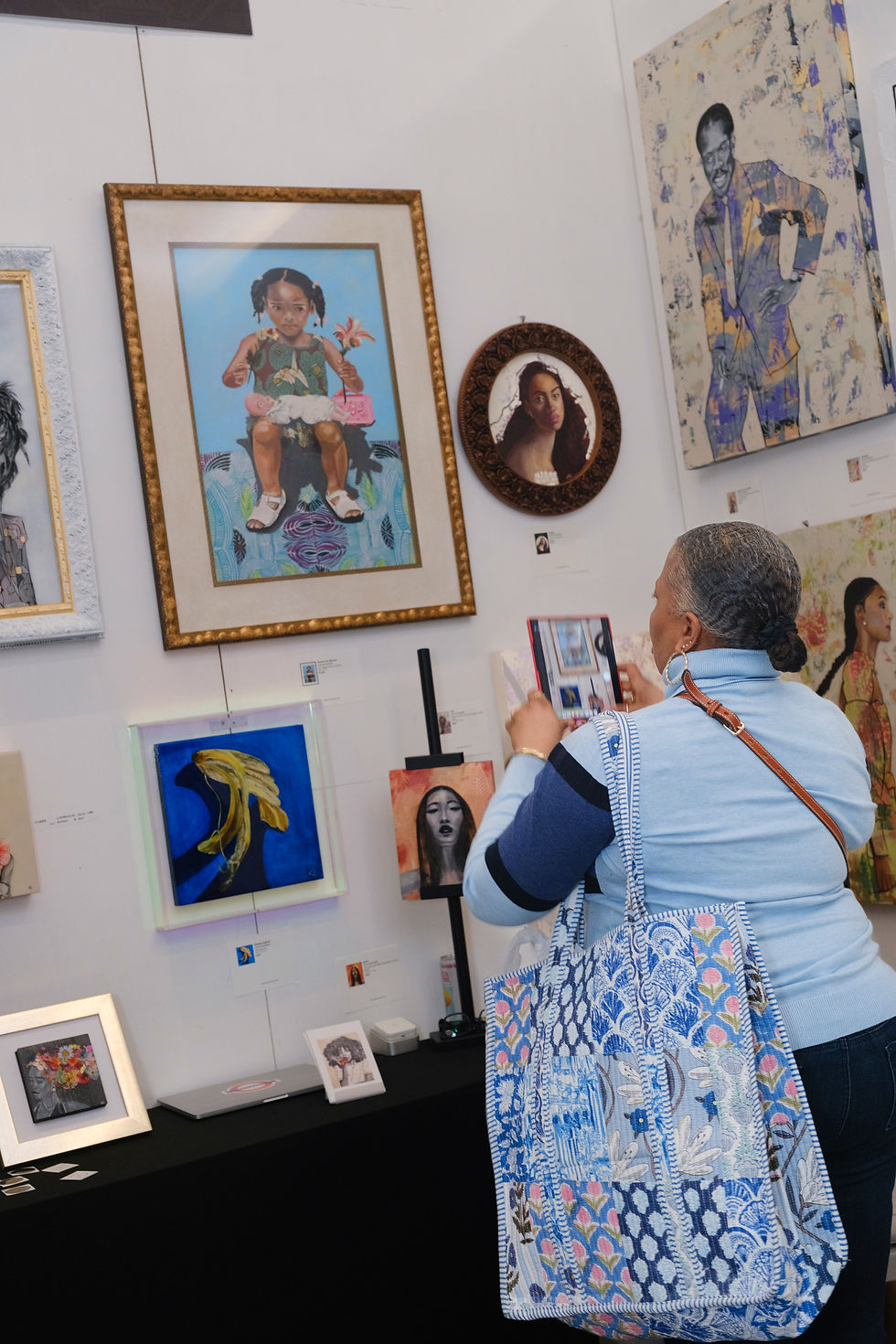
Navigating Economic Realities
We are living in times where financial decisions feel heavier. Where investing in something non-essential can feel like a luxury, even when it feeds something essential inside of us.
This is where many collectors begin to shift—toward prints, toward smaller works, toward building slowly and intentionally.
And there is no less value in that.
A well-chosen print, thoughtfully framed, can carry just as much presence. A small original can hold just as much emotion. Collecting doesn’t have to start big—it just has to start honestly.
The Artist’s Side of the Story
Something I think more collectors are beginning to understand is what goes into the work beyond the final piece.
Art doesn’t just appear—it is built. Layer by layer. Thought by thought.
There are material costs. Studio time. Failed attempts. Exhibitions that require investment long before there is return. And perhaps most importantly, the emotional energy it takes to stay open, to stay inspired, to continue creating in a world that doesn’t always make space for it.
When you collect a piece, you’re not just buying an object—you’re supporting that entire ecosystem. You’re allowing the artist to continue.
The DRA Belief
At the heart of my work is a simple belief: if a piece touches you, it should be within reach.
Art should not feel gated. It should not feel like something you admire from a distance without ever being able to bring into your life.
That’s why I create across ranges—different sizes, different price points, different mediums. Originals, yes. But also prints. Small works. Pieces that allow more people to engage, to collect, to feel connected.
Because art is not just for walls—it’s for people.
The Real Joy of Collecting
The joy isn’t in the transaction. It’s in the meaning.
It’s in waking up and seeing something that reminds you who you are, or who you’re becoming. It’s in building a space that reflects your inner world. It’s in supporting creativity, in choosing intention over emptiness.
And yes—there are challenges. There are budget considerations, timing, uncertainty.
But there is also something incredibly powerful about choosing to live with art. To let it surround you. To let it speak.
Because in the end, becoming an art collector isn’t about having—it’s about feeling.
And that’s where the real value lives.


Comments